
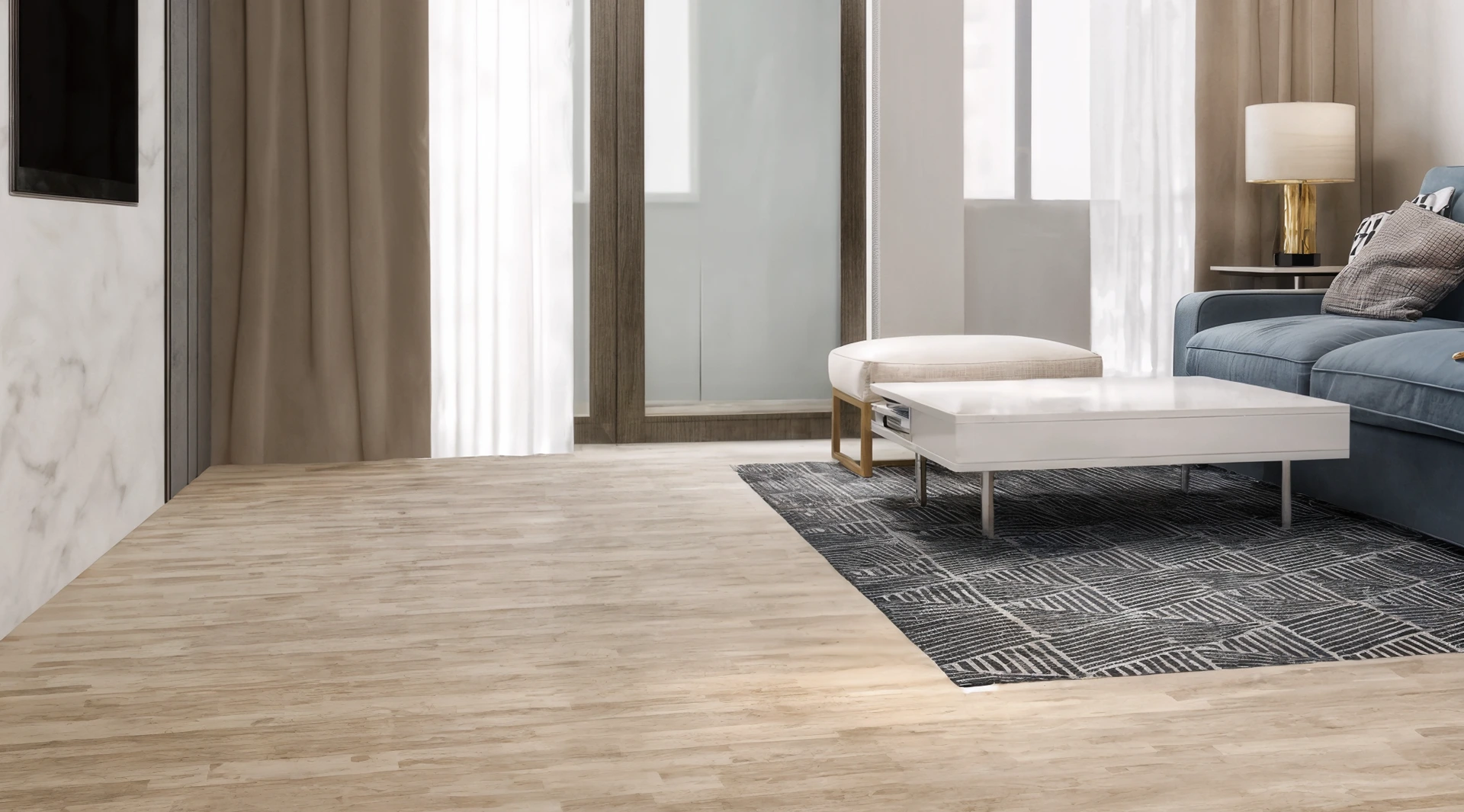
Walk into most flooring showrooms across South Africa and you'll still find laminate and vinyl taking centre stage. They're familiar, they're widely stocked, and the price tags look friendly. But familiar isn't always better — and the flooring market has quietly moved on.
SPC (Stone Polymer Composite) flooring is the newest generation of hard flooring, and it's rapidly becoming the go-to choice for South African homeowners, property developers, and contractors who want a floor that genuinely performs. Not just in a dry lounge. Everywhere.
If you're currently weighing up your flooring options, this guide gives you the honest, no-fluff comparison you need. We'll break down exactly what SPC flooring is, how it stacks up against laminate and standard vinyl, and why it makes particular sense for South African conditions.
What Is SPC Flooring — and Why Is It Different?
SPC stands for Stone Polymer Composite. The name tells you a lot: the core of each plank is made from a blend of limestone powder, polyvinyl chloride (PVC), and stabilisers. The result is an ultra-dense, rigid composite that behaves nothing like the wood-based core of laminate or the flexible PVC of standard vinyl.
A quality SPC plank is built in distinct layers that each serve a purpose:
- UV Protective Coat — shields the surface from sun exposure and fading.
- Wear Layer — the transparent top layer that takes the daily punishment. A 0.5mm wear layer (as found in Duradek SPC flooring) is commercial-grade, meaning it's engineered to withstand heavy foot traffic, furniture movement, and the odd dragged appliance.
- Decorative Film — high-definition printed wood or stone design. Modern printing technology means the visual difference between SPC and real timber is minimal to the naked eye.
- SPC Rigid Core — the limestone-PVC composite at the heart of the plank. This is what makes SPC waterproof, dimensionally stable, and resistant to impact.
- IXPE Acoustic Underlay — a pre-attached foam backing that absorbs sound and adds comfort underfoot.
That layered construction is what separates SPC from everything that came before it. It's not just a marketing evolution — it's a fundamentally different product.
SPC vs Laminate Flooring — The Honest Comparison
Laminate has been the affordable renovator's favourite for decades, and for good reason — it looks great, it's cost-effective, and it's widely available. But it has a fundamental structural weakness: its core is high-density fibreboard (HDF), which is a wood-based material. And wood-based materials and water are not friends.
Water Resistance
Laminate is not waterproof. Full stop. It can tolerate a light spill wiped up promptly, but sustained moisture — a dripping dishwasher, a wet bathroom floor, humidity in a poorly ventilated laundry — will cause it to swell, warp, and delaminate. Once that damage is done, replacement is the only option.
SPC flooring, by contrast, has a 100% waterproof stone-polymer core. It cannot absorb water. You can install it in bathrooms, kitchens, laundry rooms, and even covered outdoor areas without concern.
Subfloor Flexibility
Installing laminate over an uneven subfloor — and many South African homes have tiled floors rather than concrete screeds — requires significant prep work to level the surface. SPC's rigid core is more forgiving of minor subfloor imperfections, and it can typically be floated directly over existing tiles without adhesive or extensive preparation.
Durability and Lifespan
A quality SPC plank with a 0.5mm wear layer offers commercial-grade scratch and dent resistance. Laminate, while reasonably scratch-resistant at higher AC ratings, is more susceptible to surface damage and edge swelling over time. A 15-year residential warranty on SPC versus a typical 10-year warranty on laminate reflects that durability gap clearly.
Maintenance
Laminate cannot be wet-mopped with abandon — too much water at the seams causes problems over time. SPC simply doesn't have that limitation. A regular sweep and a damp mop is all it needs, with no special cleaners or fussy routines.
SPC wins in every category relevant to moisture-prone areas (kitchens, bathrooms, laundries), high-traffic spaces, and homes where subfloor prep is limited. Laminate remains a reasonable option for dry, low-traffic rooms where budget is the primary driver. But for a floor-wide solution across a whole home or commercial space, SPC is the stronger long-term investment.
SPC vs Vinyl Flooring — Not All Waterproof Floors Are Equal
This is where the conversation gets more nuanced. Standard LVT (Luxury Vinyl Tile) vinyl is often marketed as waterproof, and technically it is — but there's a structural difference between SPC and flexible LVT that matters in practice.
Rigidity and Stability
Standard LVT is flexible. While that flexibility makes it softer underfoot, it also means it can lift, buckle, and telegraph subfloor imperfections over time — particularly in areas exposed to temperature changes. SPC's rigid limestone core eliminates this problem. It stays flat, stays locked, and doesn't shift.
Thickness and Feel
Many budget vinyl products are 2–3mm thick. SPC flooring typically ranges from 5–7mm, with the Duradek range sitting at 6mm total — a meaningful difference in how solid and stable the floor feels underfoot. Thicker planks also bridge minor subfloor variations far better than thinner flexible vinyl.
Wear Layer
The wear layer is what determines how long a floor will look good under daily use. Budget LVT products often feature a 0.2mm or 0.3mm wear layer — adequate for light residential use, but not built for high foot traffic or commercial environments. A 0.5mm wear layer, as specified on Duradek SPC flooring, is the threshold most professionals consider commercial-grade.
Sound and Comfort
Flexible vinyl without an attached underlay can produce a hollow sound when walked on — a giveaway that the floor lacks substance beneath. SPC with a pre-attached IXPE acoustic underlay absorbs walking noise and provides a noticeably more solid, comfortable feel. In apartments, open-plan offices, and commercial environments, that sound reduction is a meaningful quality-of-life difference.
SPC is best understood as an evolution of vinyl, not a direct competitor. It takes vinyl's waterproof credentials and combines them with the rigid stability, thicker construction, and superior wear layer that standard LVT cannot match. If you're comparing SPC against budget flexible vinyl, SPC wins on every structural metric. The only trade-off is a slightly higher entry price — which its longer lifespan more than offsets.
SPC vs Laminate vs Vinyl — Side-by-Side Comparison
Here's a quick-reference breakdown across the factors that matter most for South African homes and commercial spaces:
| Factor | SPC Flooring | Laminate | Standard Vinyl (LVT) |
|---|---|---|---|
| Water Resistance | 100% Waterproof | Not waterproof | Water-resistant only |
| Core Material | Limestone + PVC | HDF (wood fibre) | PVC (flexible) |
| Rigidity / Stability | Rigid core – no flex | Medium | Flexible – can lift |
| Scratch Resistance | 0.5mm wear layer | Medium–High | Medium (varies by grade) |
| Subfloor Tolerance | Forgiving of minor imperfections | Needs flat surface | Needs very flat surface |
| Sound Absorption | IXPE underlay built in | Needs separate underlay | Varies – often none |
| Installed over tiles? | Yes | Usually not | Often not |
| Temperature Stability | Excellent | Medium | Can expand / contract |
| Lifespan (Residential) | 15-year warranty | ~10 years | ~8–10 years |
| Maintenance | Damp mop only | Careful – avoid wet mop | Easy – wipe clean |
Why SPC Flooring Makes Particular Sense for South African Homes
Most flooring comparisons are written for European or North American markets. South Africa presents its own set of conditions that actually make the case for SPC even stronger.
Temperature Fluctuations
Gauteng in particular experiences significant temperature swings — freezing winter mornings, intense summer heat, and the abrupt transitions that come with afternoon thunderstorms. Laminate and standard vinyl both expand and contract with temperature changes, which over time can cause gaps, buckling, and click-lock failure.
SPC's stone-polymer core has exceptional dimensional stability. It handles temperature variation without warping, lifting, or gap formation — a meaningful advantage in a climate as variable as South Africa's.
Tiled Subfloors
The majority of South African homes are built on concrete slabs, and many existing floors are tiled. Ripping up tiles before laying new flooring adds cost, mess, and time to any renovation. SPC flooring can be floated directly over existing tiles (provided they're reasonably level and securely bonded), significantly reducing installation time and cost.
Domestic and High-Traffic Use
South African family homes are active, high-use spaces. Domestic workers, multiple occupants, kids, pets, and heavy foot traffic are the norm — not the exception. The commercial-grade wear layer on quality SPC flooring is built for exactly this kind of sustained daily use.
Moisture in Older Properties
Many older South African homes — particularly pre-1980s construction — have moisture ingress issues in bathrooms, kitchens, and utility areas. Laminate in these environments is a risk. SPC's complete waterproofing removes that risk entirely.
What to Look for When Buying SPC Flooring in South Africa
Not all SPC flooring is created equal. Before you commit, here are the specifications to verify:
- Core Thickness: Look for a minimum of 5mm total thickness. A 6mm core offers better stability and a more solid feel underfoot.
- Wear Layer: 0.3mm is entry-level. 0.4mm is mid-range. 0.5mm and above is commercial-grade and the threshold you should insist on for high-traffic areas or whole-home installations.
- Underlay: Pre-attached IXPE or foam underlay saves cost and ensures even sound absorption. If the product doesn't include pre-attached underlay, factor in the additional cost.
- Click System: The Unilin click system is a globally trusted locking mechanism used on premium SPC and laminate products. It ensures a secure, gap-free installation that doesn't shift over time.
- Material Quality: 100% virgin material construction — as opposed to recycled plastics — delivers higher density, more consistent quality, and better long-term structural integrity.
- Warranty: A 15-year residential warranty signals genuine confidence in the product. Be sceptical of products offering shorter coverage or vague warranty terms.
SPC Flooring Prices in South Africa — What Should You Expect to Pay?
Pricing in the South African flooring market varies considerably by product quality, brand, and whether you're buying supply-only or supply-and-install.
As a general market guide:
- Budget laminate: R179 – R249/m² (supply only, 8mm, AC3 rating)
- Mid-range laminate: R250 – R349/m²
- Budget/flexible LVT vinyl: R200 – R350/m²
- SPC flooring (quality): R350 – R550/m² depending on spec and brand
Duradek SPC flooring, available exclusively through Alu-Decor's Flooring Division, is priced at R450/m² supply only — placing it squarely in the competitive mid-range of the SPC market. Professional installation is available from an additional R75/m².
The important context here is total cost of ownership. A cheaper laminate floor in a bathroom may last 3–4 years before moisture damage requires replacement. A quality SPC floor in the same space, at a higher upfront price, may outlast the next two renovation cycles. When you factor in replacement costs, the numbers tell a very different story.
Duradek SPC Flooring — Available Through Alu-Decor
Alu-Decor has been delivering premium aluminium and glass solutions across Gauteng for over 15 years. Their new Flooring Division brings that same commitment to quality to the SPC flooring market, as an authorised distributor of Duradek Africa flooring.
The Duradek range available through Alu-Decor meets every benchmark we've outlined in this guide:
- 6mm SPC rigid core for exceptional stability and strength
- 0.5mm commercial-grade wear layer for long-term surface protection
- 1mm pre-attached IXPE acoustic underlay for comfort and sound reduction
- 100% virgin material construction for consistent quality and density
- Unilin click locking system for secure, professional installation
- BP embossed finish for a realistic wood-grain appearance
- 15-year residential warranty / 10-year commercial warranty
Three architectural finishes are available — Natural Warm Oak, Nordic Light Oak, and Smoked Natural Oak — each designed to complement contemporary South African interior trends. Planks measure a generous 1520 x 230mm with a modern matte finish and micro-bevel edge.
Alu-Decor delivers nationwide, with professional installation available in Gauteng and surrounding regions.
Ready to Upgrade Your Floor?
Get a free SPC flooring quote from Alu-Decor's Flooring Division. Whether you're renovating a single room or speccing out a full development, Chris and the team will help you find the right solution at the right price.
Content prepared by Tactical Digital Marketing for Alu-Decor | March 2026
All product specifications sourced directly from Alu-Decor's Duradek SPC Flooring product page. Pricing accurate at time of publication. Warranty terms and conditions apply — confirm with Alu-Decor at point of purchase.