
Tilt and Turn Windows in South Africa: A Complete Guide for Homeowners
If you have only ever used a standard sliding window, a tilt and turn window can feel like a different language. It opens in two ways from a single handle, it seals like a fridge door, and it has become one of the most asked-about options for South African homeowners renovating or building. This guide explains how tilt and turn windows work, where they suit your home, where they don’t, and how to choose with confidence — drawing on the practical experience of Chris Slabbert, Managing Director of Alu-Decor.
What is a tilt and turn window?
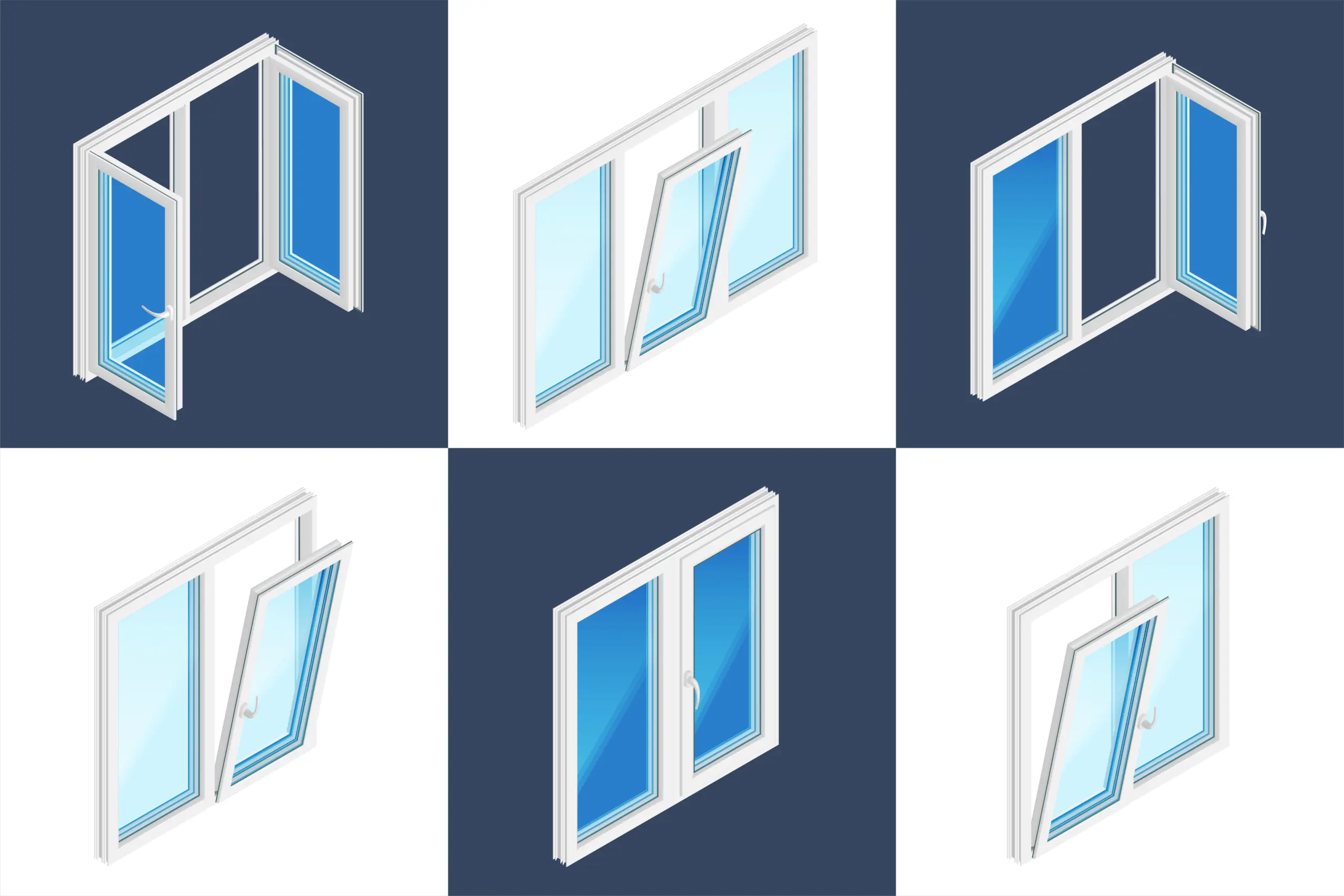
A tilt and turn window is a European-engineered window that opens in two distinct ways using one handle. Turn the handle one way and the window tilts inward from the top for controlled ventilation. Turn it further and the whole window swings inward like a door. It is built on heavy-duty profiles with multi-point locking and compression sealing as standard.
That is the core difference from the sliding window most South African homes are fitted with. A sliding window moves horizontally in a track — simple and familiar. A tilt and turn doesn’t slide at all. It is engineered to seal tightly, lock at several points at once, and give you two separate ways to let air in. As Chris Slabbert puts it, when you close one you actually feel it lock, rather than sliding it shut and hoping the latch catches.
How the tilt and turn mechanism works
The two modes: tilt for air, turn for full opening
The clever part of a tilt and turn window is the dual-function handle. In the tilt position, the window leans inward from the top by a small, restricted gap — enough for steady background airflow without the window being wide open. In the turn position, the entire sash opens inward on a side hinge, giving you a full opening for maximum ventilation or for cleaning. One handle, two jobs. The mechanism was developed largely in Germany and became the default in European apartments, where outward-opening windows are impractical on upper floors.
Multi-point locking and compression sealing
When you operate the handle, you engage multiple lock points around the frame at the same time. Industry sources describe this as distributed force resistance — because the locking points are spread around the perimeter, the sash cannot easily be levered away from the frame without noisy, time-consuming damage. At the same time, compression gaskets pull the sash tight against the frame, which is what gives a tilt and turn its firm, sealed feel when closed.
The advantages of tilt and turn windows
For the right room, a tilt and turn window offers genuine, practical benefits over a standard sliding window:
- Graduated ventilation control. The tilt position gives you background airflow with the window barely open — useful in light rain, or when you want fresh air without a full opening.
- Cleaning from inside. Because the sash rotates fully inward, you can clean the outside face of the glass from inside the room. On an upper floor, or above a kitchen counter, that is a real advantage.
- Child-conscious ventilation. Left in tilt mode, the opening is small and purposefully restricted — ventilation through a gap a child cannot climb through.
- Strong security as standard. Multi-point locking is built in, not an optional extra, which puts a tilt and turn well ahead of a standard sliding window.
- A proper seal. Compression gaskets and multi-point locking close the window tightly against dust, draughts and noise.
The one thing to know before you choose: the inward swing
Here is the honest part, and it is the conversation Chris Slabbert insists on having before a window is specified, not after it is installed. A tilt and turn window opens inward. In the turn position, the sash swings into the room.
In a bedroom with a bed against the wall, a kitchen with a counter under the window, or a narrow passage, that inward swing can clash with furniture and eat into usable space. It is not a flaw in the window — it is simply a design consideration. The single most useful question to ask before you choose a tilt and turn is: what is on the wall directly below and beside this window? If the answer is “nothing,” a tilt and turn is an easy choice. If the answer is a counter, a headboard or a cupboard, an outward-opening window may serve you better.
Tilt and turn vs casement windows: which suits your home?
The realistic alternative to a tilt and turn is a European casement window — an outward-opening, side-hung or top-hung window built on the same heavy-duty profiles, with the same multi-point locking and compression sealing. The engineering baseline is the same. The mechanism is what differs, and that is what should guide your choice room by room.
Where tilt and turn works best
- Upper-floor rooms, where cleaning the outside of the glass from inside is genuinely useful and often safer.
- Rooms with no easy exterior access.
- Modern apartments and townhouses where a clean, flush frame suits the architecture.
- Bedrooms and studies where controlled, restricted tilt ventilation is used regularly.
Where an outward casement makes more sense
- Kitchens with a counter directly below the window — an inward-opening sash above a countertop is a daily frustration.
- Furniture-filled ground-floor rooms — a dining room with a sideboard, a bedroom with a headboard against the wall.
- Any room where the interior wall space below the window is in use and the exterior is easy to reach.
Mixing both across one home
You do not have to choose one type for the whole house. In Chris Slabbert’s experience, the best result usually comes from mixing configurations intelligently — outward casements on the ground floor where furniture layout is a constraint, and tilt and turn on upper floors where the cleaning and ventilation benefits matter most. Because both window types can carry the same profile, the same hardware finish and the same glazing, they still read as one coherent system across the house, even when the mechanisms differ from room to room.
Room-by-room: choosing the right window
A quick guide to what tends to work where:
- Kitchens: an outward-opening casement almost always, especially with a counter below the window.
- Bathrooms: a tilt and turn or a top-hung outward casement both work — you want ventilation without full exposure, and a restricted opening helps where privacy matters.
- Bedrooms: it depends entirely on the layout. Clear wall space below the window favours tilt and turn; a bed or furniture beneath it favours an outward casement.
- Upper floors: tilt and turn has a clear cleaning advantage and often makes more architectural sense on a double-storey facade.
Tilt and turn windows in South African conditions
South African homeowners have two local considerations that matter more than the brochure usually admits: dust and security. On the Highveld, winter is dry and dusty — low rainfall and calm, stable conditions trap fine particulate matter close to the ground. This is actually a strong argument for European windows: the compression gaskets used on tilt and turn and casement windows seal out fine dust far more effectively than the brush seals on a standard sliding window.
On security, the context is hard to ignore. Statistics South Africa’s most recent Governance, Public Safety and Justice Survey found that housebreaking remains the most common crime experienced by South African households, with an estimated 1.5 million incidents in a single year, affecting 5.7% of all households. Multi-point locking, standard on a tilt and turn window, puts it well ahead of a standard sliding window on this measure. In coastal areas, the quality of the powder coating and the hardware specification matter more than the mechanism itself — marine-grade hardware is worth specifying within a few kilometres of the sea.
Maintenance: what to expect long term
Tilt and turn windows are low maintenance when they are installed correctly. The hardware is engineered for a very high number of opening cycles, so normal household use will not wear it out. The practical maintenance is light: keep the gaskets clean, and apply a little lubricant to the locking points and hinges roughly once a year.
One honest note — a tilt and turn handle has slightly more moving parts than a simple casement, because it drives two functions. In normal use that makes no difference. But if a household is hard on hardware, that is worth knowing upfront. Either way, a correctly installed European window will comfortably last the life of the building.
Frequently asked questions
Are tilt and turn windows worth it in South Africa?
For the right room, yes. A tilt and turn gives you graduated ventilation, the ability to clean the outside of the glass from inside, and multi-point locking as standard. The key is matching it to rooms where the inward swing does not clash with furniture or counters.
Can tilt and turn windows be double glazed?
Yes. Tilt and turn windows can be specified with double glazing. When it comes to thermal and acoustic performance, the quality of the seal and the glazing specification matter more than the opening mechanism itself — a well-sealed, well-glazed window performs well regardless of whether it tilts or swings.
Are tilt and turn windows secure?
They are strong when correctly installed. Multi-point locking engages several points around the frame at once, which makes the sash far harder to lever open than a single-latch sliding window. As with any window, the integrity of the installation is as important as the hardware.
What blinds work with tilt and turn windows?
Because a tilt and turn opens inward, blinds need to be chosen with the swing in mind. Blinds fitted close to the glass on the sash itself, or outside the window reveal so they clear the inward opening, both work well. Standard blinds mounted in the reveal can foul the sash when it swings in, so plan this before installation.
Get the right windows for your home
The honest answer to “tilt and turn or not” is that it depends on the room — and the best result usually comes from specifying the right window for each space rather than forcing one type throughout. That is a judgement call best made with someone who measures and installs these systems every day.
Alu-Decor has manufactured and installed premium aluminium and glass systems across Gauteng for more than 15 years, with in-house design, measurement, manufacture and installation — no outsourced labour — and a one-year installation guarantee on every project. Explore the aluminium windows range, take a closer look at the European-style aluminium windows and doors, or talk to Alu-Decor about the right windows for your home.